Philippine Navy’s first research vessel arrives to Manila

7:29:00 AM Add Comment
MANILA, -- Former U.S. Navy research vessel R/V Melville, now BRP Gregorio Velasquez, arrived to Manila, Philippines today, June 10 as the Philippine Navy’s first dedicated research vessel.

The U. S. Navy transferred ownership of BRP Gregorio Velasquez to the Philippine on April 27, 2016.

The 279 feet (85m) long vessel arrived to the country after almost a month and a half voyage from San Diego, California.

The ship was transferred under the U.S. Department of Defense’s excess defense articles program to help augment the Republic of the Philippines oceanographic research and study capabilities.

R/V Melville was built in 1969 with funding by the U.S. Navy, and subsequently owned by the Office of Naval Research and operated by Scripps as part of the University-National Oceanographic Laboratory System (UNOLS).

BRP Gregorio Velasquez is one of the two vessels U.S. president Barrack Obama promised to give to the Philippines during his visit to Manila in November 2015. The other vessel is the U.S. Coast Guard high endurance cutter Boutwell.


The Philippine Navy's first Auxiliary General Research ship BRP Gregorio Velasquez (AGR 702) at Pier 13 in South Harbor, Manila.


https://goo.gl/2J9tMI


GRSE Close to Sealing Deal with Philippines on Warship Export

12:51:00 AM Add Comment
MANILA, -- Inching closer towards finalising a deal with the Philippines Navy, defence PSU Garden Reach Shipbuilders and Engineers (GRSE) has emerged as the lowest bidder for exporting two frigates to the Southeast Asian island country.

"We are the lowest price bidder for the order. Now the government is evaluating other aspects before placing the order. We are hopeful of a positive outcome but things are not final yet," Commodore Ratnakar Ghosh, Director (shipbuilding), GRSE, told PTI.

Few days ago, a team from the Philippines Navy visited the facilities of the Kolkata-based shipyard and expressed satisfaction at the infrastructure.

"If you look at the infrastructure nobody is better than us. We have been in negotiations with them for the last two years and now they are examining other bidders also," company chairman and managing director Rear Admiral (Retd) A K Verma said.

If GRSE bags the order, it will be India's second export order for delivering a warship and a boost to Prime Minister Narendra Modi's 'Make in India' campaign.

The shipyard already has the distinction of exporting India's first warship, an offshore patrol vessel, to Mauritius in December 2014.

Buoyed by the success, GRSE had participated in the bidding process for building two frigates for the Philippines.

As per the specifications laid down by the Philippines government, they want two light frigates of 109 meter length which can run at a speed of 25 knots.

Officials said these are for general purpose use in protecting their maritime boundaries.

GRSE already has the required expertise for making frigates as the Kolkata shipyard has bagged the order of making three advanced stealth frigates from the Indian Navy.

"In between we have the capacity to build these frigates for them," Verma said.

GRSE has also built INS Kamorta, first in its class of four anti-submarine warfare corvettes, which is the first warship ever built in the country with almost 90 per cent of indigenous content.

Ghosh said they are in touch with other nations like Vietnam and Bangladesh for building warships.


The Indian Navy's new-generation anti submarine warfare platform Kamorta class (P-28) Anti-Submarine corvette.


http://goo.gl/V7mgzS


US, Indian, Japanese Maritime Forces to Participate in Malabar 2016

7:17:00 PM Add Comment
SASEBO, -- Naval ships, aircraft and personnel from India, Japan and the United States are scheduled to participate in the annual exercise Malabar 2016, June 9-17.

Malabar 2016 is the latest in a continuing series of complex, high-end warfighting exercises conducted to advance multinational maritime relationships and mutual security issues.

Participants from the U.S. Navy include Nimitz-class aircraft carrier USS John C. Stennis (CVN 74) with embarked Carrier Air Wing 9, guided-missile cruiser USS Mobile Bay (CG 53) and guided-missile destroyers USS Stockdale (DDG 106), USS William P. Lawrence (DDG 110) and USS Chung-Hoon (DDG 93); a P-8A Poseidon aircraft; and a Los Angeles-class fast attack submarine.

The exercise will feature both ashore and at-sea training in the Philippine Sea. While ashore in Sasebo, training will include subject matter expert and professional exchanges on carrier strike group operations, maritime patrol and reconnaissance operations, surface and anti-submarine warfare, medical operations, damage control, explosive ordnance disposal (EOD), helicopter operations, and visit, board, search and seizure (VBSS) operations.

The at-sea portions of the exercise will be conducted in the Philippine Sea and are designed to advance participating nations' military-to-military coordination and capacity to plan and execute tactical operations in a multinational environment.

Events planned during the at-sea portions include liaison officer professional exchanges and embarks, a photo exercise, submarine familiarization, high-value unit defense, air defense exercises, medical evacuation drills, surface warfare exercises, communications exercises, search and rescue exercises, helicopter cross-deck evolutions, underway replenishments, gunnery exercises, VBSS exercises, and anti-submarine warfare.

Indian, Japanese and U.S. maritime forces have a common understanding and knowledge of a shared working environment at sea. Each iteration of this exercise helps to advance the level of understanding between the navies' Sailors, and is a continuing process over time. Members of the Indo-Asia-Pacific nations utilize their maritime forces as natural partners, and continue to strengthen relationships.

For a list of participating Indian forces, please refer to the Indian Navy Headquarters. For a list of participating Japanese forces, please refer to the Japan Maritime Staff Office.


The US Navy aircraft carrier USS Theodore Roosevelt (CVN 71), Japanese Maritime Self-Defense destroyer Fuyuzuki and Indian Shivalik-class frigate Shivalik transit into formation during a photo exercise as a part of Exercise Malabar 2015.


http://goo.gl/N0Yt6G


Indonesia Launches Investigation into Kapitan Pattimura-class Corvette Accident

8:28:00 PM Add Comment
JAKARTA, -- The Indonesian Navy (Tentara Nasional Indonesia - Angkatan Laut, or TNI-AL) has launched a formal enquiry into an accident that has partially sunk one of its Kapitan Pattimura (Parchim I)-class corvettes.

The vessel, KRI Pati Unus, was sailing from the Malacca Strait towards the port of Belawan, Sumatra on 13 May 2025 when it hit an underwater object believed to be the remains of a ship that has wrecked near the port entrance. The TNI-AL only confirmed the incident in late May after images of the stricken vessel spread online.

A TNI-AL Western Fleet (KOARMABAR) source has also since confirmed with IHS Jane's that the corvette was not on an authorised route into the port and that an assessment into the vessel's damage has begun in tandem with accident investigations.

Bearing pennant number 384, Pati Unus is an ex-German Democratic Republic ship that was originally inducted into the East German Navy in July 1983. The vessel was re-commissioned into the TNI-AL in July 1995.

The TNI-AL operated a fleet of 16 ships in the class from the mid-1990s before KRI Memet Sastrawiria (380) was damaged by fire in 2008 and subsequently decommissioned. The service was however not able to comment on the extent of Pati Unus ' damage or confirm if the ship will also be retired.


The Indonesian Navy corvette KRI Pati Unus (384).


http://goo.gl/EefQXg


22nd Annual CARAT Philippines Exercise Begins in Subic Bay

8:15:00 PM Add Comment
SUBIC Bay, - The U.S. Navy and Marine Corps will join the Armed Forces of the Philippines June 6-10 for CARAT Philippines 2016.

The exercise will take place in multiple locations across the Philippines and in waters near Subic Bay and Palawan.

This year's CARAT Philippines will focus on combined operations at sea, amphibious landings, diving and salvage, maritime domain awareness, and community service events. Sailors and Marines will train with their AFP counterparts in a host of military engagements, professional exchanges and training seminars. Civil action projects, community service events and combined military band concerts are also planned to foster relationships and bonds with the Filipino people.

“CARAT enables us to develop strong relationships with our Philippine Navy and Marine partners,” said Rear Adm. Charles Williams, Commander, Task Force 73. “Through persistent presence and relationships, we continue to make steady progress in increasing the complexity of our training and enhancing cooperation between our navies.”

CARAT Philippines is part of a broader exercise series the U.S. Navy conducts with nine partner nations in South and Southeast Asia to address shared maritime security priorities, strengthen maritime partnerships and enhance interoperability among participating forces. The Philippines has participated since the series began in 1995.

"CARAT strengthens the strong and enduring relationships between the U.S. and Philippine navies," said Rear Admiral Ronald Joseph S. Mercado AFP, commander, Philippine Fleet. "We're looking forward to working along-side our U.S. Navy partners during CARAT 2016.

U.S. Sailors and Marines participating in CARAT Philippines 2016 represent a host of ships, squadrons, and units from across the Indo-Asia-Pacific region. This year’s exercise features the guided missile destroyer USS Stethem (DDG 63), the landing dock ship USS Ashland (LSD 48), and the diving and salvage ship USNS Salvor (T-ARS-52), along with a P-8 Poseidon aircraft, Navy expeditionary forces, Marines assigned to the III Marine Expeditionary Force - 3rd Marine Division, a platoon from Explosive Ordnance Disposal Mobile Unit (EODMU) 5, staff from Commander, Task Force 73 (CTF 73) and Destroyer Squadron (DESRON) 7, and the 7th Fleet Band Orient Express.

The Philippine Navy assets and units will include the Minesweeper Frigate BRP Rizal (PS74), the Del Pilar Class Frigate BRP Gregorio Del Pilar (PF-15), a Landing Craft Heavy vessel, an AW109 helicopter, an EOD Team, Diving Team, Construction platoon, a Marine Company and the Philippine Fleet Band.

“CARAT provides a great opportunity for our navies to operate together at sea and train during realistic scenarios that better prepare our forces for real-world operations,” said Capt. H. B. Le, commodore, Destroyer Squadron Seven. "With more than two decades of experience working together we are able to execute complex exercises that address shared maritime security priorities and improve interoperability between our navies.”

CARAT 2016 will be the most complex series to date. Its continuing relevance for more than two decades speaks to the high quality of exercise events and the enduring value of regional cooperation among allies and partners in South and Southeast Asia.

As U.S. 7th Fleet's executive agent for theater security cooperation in South and Southeast Asia, Commander, Task Force 73 conducts advanced planning, organizes resources and directly supports the execution of maritime exercises, such as the bilateral CARAT series, the Naval Engagement Activity (NEA) with Vietnam, and the multi-lateral Southeast Asia Cooperation and Training (SEACAT) with Brunei, Indonesia, Malaysia, the Philippines, Singapore, and Thailand.


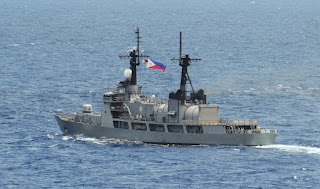
The Philippine Navy ship BRP Gregorio Del Pilar (PF-15).


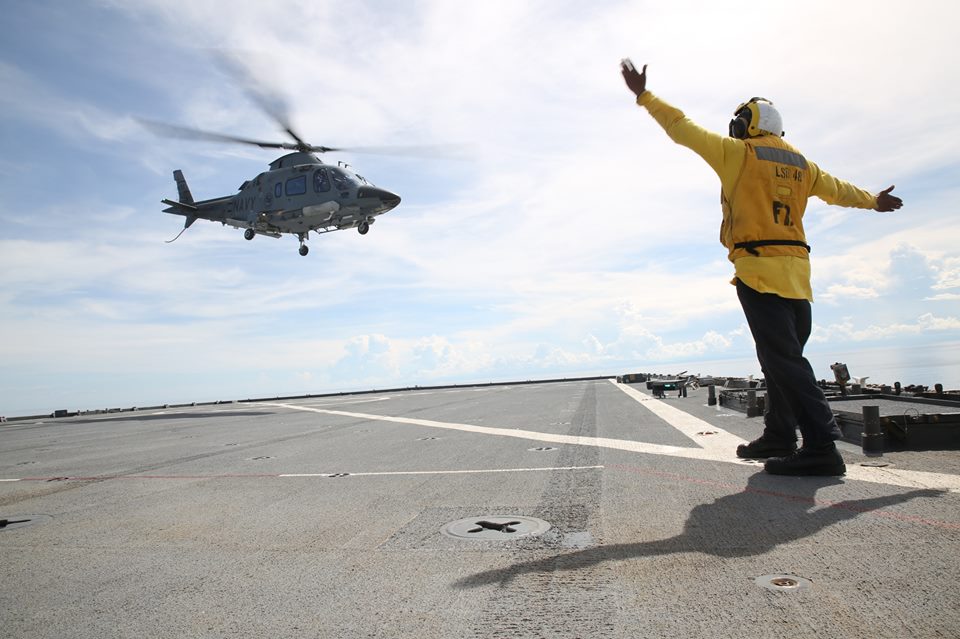
Boatswains Mate 2nd class Lonnie Sylvester, a sailor aboard the forward-deployed dock landing ship USS Ashland (LSD 48), guides a Philippine AW-109 helicopter while conducting deck landing qualifications in support of exercise Cooperation Afloat Readiness and Training.


http://goo.gl/n1uCwm


French naval ship berthed in Vietnam for friendship visit

8:05:00 PM Add Comment
HANOI, -- The French Navy’s amphibious assault ship Tonnerre, with about 200 cadets on board, arrived at Cam Ranh International Port in coastal central Khanh Hoa province on May 2 for a five-day visit.

The visit aims to increase cooperation between the armed forces and navies of the two countries.

The 21,500-tonne vessel, one of the French Navy’s biggest, is 200 metre in length, 32 metres in width and about 48 metres in height.

Vietnam and France have seen their bilateral relations, particularly in defence, growing stronger over the recent years.

This is the second time Tonnerre berthed at a Vietnamese port. It first visited Ho Chi Minh City in 2013 on the celebration of the 40th anniversary of Vietnam-France diplomatic ties.

During the ship’s visit to Vietnam, its commanders will meet with the provincial authority, the Khanh Hoa Military Command, the 4th Naval Zone Command and the Vietnam Naval Academy.

Crew members of Tonnerre and officials of the 4th Naval Zone will conduct a joint military exercise which includes search and rescue operations.


The French Navy’s amphibious assault ship Tonnerre arrives at Cam Ranh International Port for a friendship visit.


https://goo.gl/NG1eg6


Europeans push back against Beijing in the South China Sea

7:57:00 PM Add Comment
SINGAPORE, -- France has thrown its hat into the acrimonious South China Sea debate, calling for more European naval patrols in a contested waterway that is at the center of a growing dispute between China and the United States and its Asian allies.

French Defense Minister Jean-Yves Le Drian, speaking Sunday at a three-day security conference in Singapore, called on European navies to have a "regular and visible" presence in the region to uphold the law of the sea and freedom of navigation.

"If we want to contain the risk of conflict, we must defend this right, and defend it ourselves," he said.

Although the French defense minister did not explicitly call out China, his remarks amounted to thinly-veiled criticism of Beijing, which has aggressively pursued its territorial claims in the South China Sea with vast dredging work and construction of military facilities on artificial islands.

"If the law of the sea is not respected today in the South China Sea, it will be threatened tomorrow in the Arctic, in the Mediterranean, or elsewhere," Le Drian told the security conference, known as the Shangri-La dialogue and hosted by the International Institute for Strategic Studies.

France's stance marked the latest international pushback against China's tough tactics in the strategic waterway, where more than $5 trillion worth of goods pass through annually.

The Singapore conference gathered top defense officials and diplomats from the region and beyond to hash through the security challenges facing Asia, especially the increasingly bitter spat over China's claims to nearly the entire South China Sea. Beijing defended its policy at the forum and accused Washington of meddling in the region. But China was the target for indirect criticism from other countries, and U.S. Defense Secretary Ashton Carter issued a stark warning to Beijing in a speech at the conference.

China would face unspecified U.S. "actions" if it tried to reclaim land at the disputed Scarborough Shoal off the coast of the Philippines, Carter said Saturday.

And on Sunday, U.S. Secretary of State John Kerry, speaking ahead of a major summit this week with Beijing on economic and security issues, admonished China to avoid declaring an air defense identification zone over the South China Sea. Doing so, he said, would be "a provocative and destabilizing act."

Since it started pressing its claims to little reefs and rocks, and feuding with other countries over fishing rights, Beijing has sought to keep the argument from being "internationalized," preferring to deal with its smaller neighbors on a one-to-one basis. China has regularly worked to keep the South China Sea disputes off the agenda at biannual meetings of the Association of Southeast Asian Nations, which includes many of the countries with which Beijing is butting heads, especially the Philippines and Vietnam.

But China's intransigence on sovereignty and territorial issues, coupled with an increasingly aggressive deployment of muscled-up coast guard ships, a rapidly modernizing navy, and a building spree on reclaimed reefs, has driven many of those Southeast Asian countries closer to the United States. Washington, for example, just ended a ban on the sale of U.S. weapons to Vietnam, and has redoubled defense ties with the Philippines.

Other Asian countries are also worried about China's activities. Japan last year said it would consider carrying out naval patrols in the South China Sea, even though Tokyo and Beijing have their own heated dispute in the East China Sea. This year, India has become increasingly vocal about the challenge China poses to free navigation in the Western Pacific.

And now, with France's comments, even European nations are advocating a more muscular response to Chinese encroachment. For France and Europe, said Le Drian, it's not just about protecting economic and trade interests in the region. It's also about upholding the international order and rule of law.

Le Drian said he would soon provide more details on his proposal for regular patrols by European navies.

The timing of the French defense minister's remarks was no accident. An international court in The Hague is due to rule this month on a long-running dispute between China and the Philippines, and Beijing has rejected the tribunal's authority while lobbying other governments to back its view. The Permanent Court of Arbitration is expected to rule against China, and Washington has been calling on Beijing to abide by the results of the decision.

"More EU involvement in the South China Sea is something the United States has hoped to see for quite a while now," Mira Rapp-Hooper, a senior fellow at the Center for a New American Security, told FP.

"The timing of the French call may also mean that we see European Union governments come out in vocal support of the Hague decision in a few weeks," she said.

France's involvement in the Asia-Pacific region hasn't been purely theoretical. It inked a $40 billion deal last year to sell advanced submarines to Australia, citing increased fears over the region's security, and called for a greater French presence around its colonial possessions in the southern Pacific.

Le Drian's words over the weekend also offer a reminder that, while China is trying to parlay its growing economic might in Europe into diplomatic dividends, some European heavyweights are still ready to push back against Beijing.

Chinese leaders want to overcome what they call a "century of humiliation," which started with European naval imperialism in the Opium Wars of the 19th century and lasted through the end of the Chinese Civil War in 1949. But ironically, their actions appear to be forcing European gunboats to again steam for the South China Sea.


The French Navy Ships Tonnerre, Georges Leygues refuels.


http://goo.gl/rSdrKB